24
General Education Pathway
A comprehensive academic pathway meeting IHSCA graduation requirements and preparing students for college, careers, leadership, and life.
Graduation begins with a clear plan and consistent progress.
Earning an IHSCA diploma requires more than completing senior year. Students must successfully earn all required credits, complete grade-level graduation requirements, participate in service learning, fulfill testing expectations, and complete required postsecondary planning activities.
Students and families should review graduation progress regularly with their assigned school counselor to ensure all requirements are completed on time.
Credit requirements vary based on the academic pathway in which a student is enrolled.
24
A comprehensive academic pathway meeting IHSCA graduation requirements and preparing students for college, careers, leadership, and life.
26
A rigorous healthcare-focused pathway combining advanced academics, Allied Health coursework, college credit, and career preparation.
Students must successfully complete the required number of credits in each subject area for their assigned academic pathway.
| Subject Area | General Education | Allied Health |
|---|---|---|
| English Language Arts | 4.0 | 5.0 |
| Mathematics | 4.0 | 4.0 |
| Science | 3.0 | 2.0 |
| Social Sciences | 3.0 | 3.0 |
| World Language | 2.0 | 2.0 |
| Physical Education | 2.0 | 2.0 |
| Fine Arts Electives | 2.0 | 1.0 |
| Academic Electives | 3.0 | 1.0 |
| Digital Literacy | 1.0 | 1.0 |
| Allied Health Coursework | — | 5.0 |
| Total Credits Required | 24 | 26 |
Credit completion is only one part of graduation. Students must also complete the following school, state, and postsecondary requirements.
Students must participate in one school-approved service-learning project during each school year.
Students must participate in required grade-level assessments, including PreACT and ACT testing.
Students must complete the required Illinois and United States Constitution instruction and assessment.
Students must participate in SchoolLinks, Learn.Plan.Succeed, and required college and career planning activities.
Seniors must complete the FAFSA or applicable approved alternative or waiver requirement.
Students must complete required grade-level course planning, career exploration, and postsecondary preparation activities.
Every student is expected to participate in one school-approved service-learning project during each school year.
A student who does not participate in the required project must complete 10 community-service hours for that school year. Community-service placements and hours must receive school approval to satisfy the requirement.
9TH GRADE
Complete service learning, PreACT 9, required planning activities, and early career exploration.
10TH GRADE
Complete service learning, PreACT 10, course planning, and college and career exploration.
11TH GRADE
Complete service learning, ACT testing, the Constitution requirement, postsecondary preparation, and financial-aid awareness.
12TH GRADE
Complete service learning, FAFSA requirements, final postsecondary planning, and all remaining credits and graduation requirements.
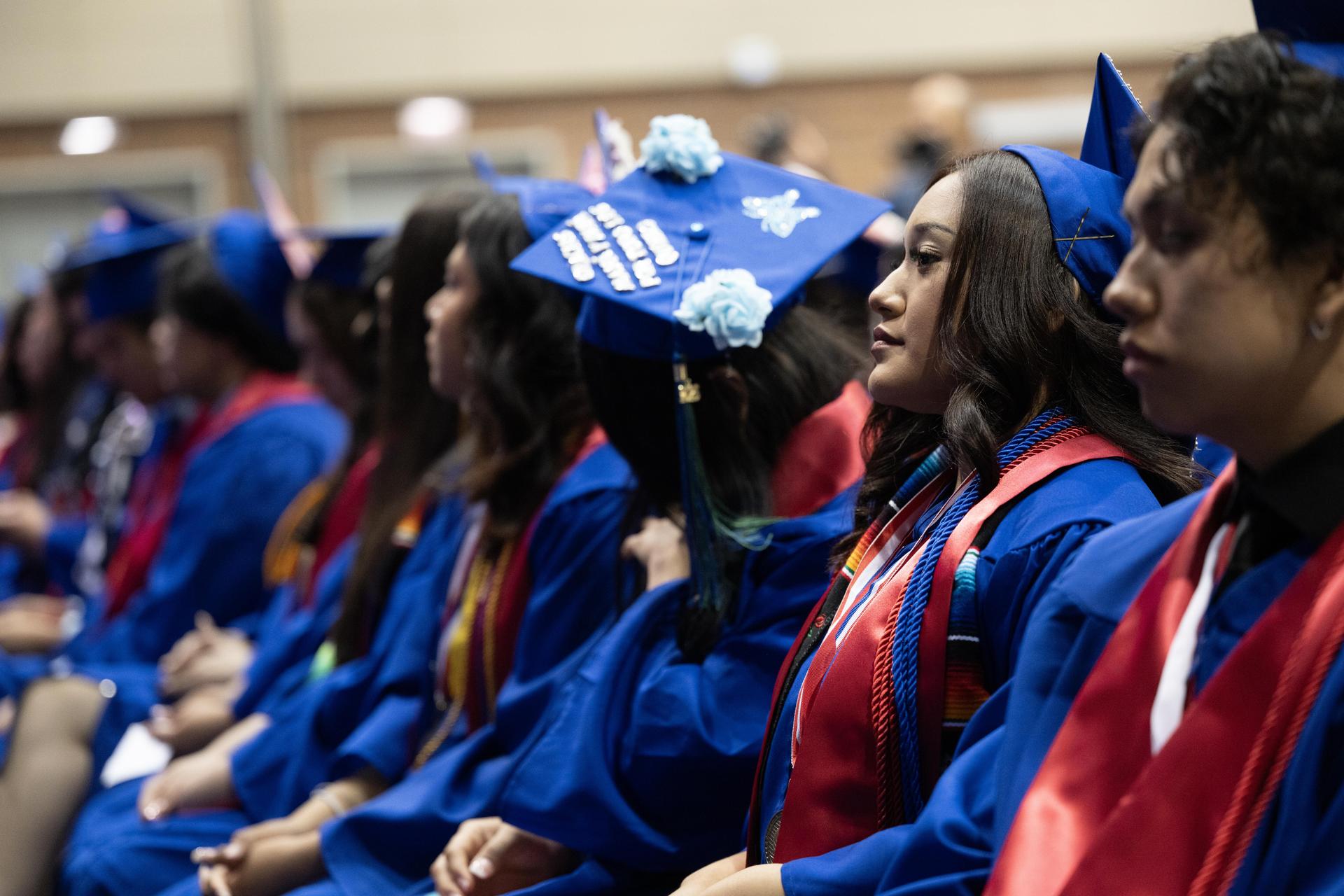
Participation in the graduation ceremony is reserved for students who are reasonably projected to complete all applicable credit and graduation requirements by the end of the school year.
Beginning of Senior Year: The school begins a comprehensive review of each senior’s graduation progress.
End of First Semester: Students must be on track to complete all graduation requirements by the end of the school year.
End of Quarter 3: Students whose eligibility depends on passing a required course are reviewed and may be placed on high alert.
Middle of Quarter 4: Teachers and school leaders determine whether required credits are reasonably projected to be earned.
Students who are not projected to meet the applicable credit and graduation requirements are not eligible to participate in the graduation ceremony.
Students who require summer school or summer credit recovery to complete graduation requirements are not eligible to participate in the spring graduation ceremony.
Students and families should regularly review earned credits, current courses, service learning, testing, and postsecondary requirements with the student’s assigned school counselor. Early communication allows time to address concerns and provide appropriate support.